How to Know When You are Ready to Leave a Relationship
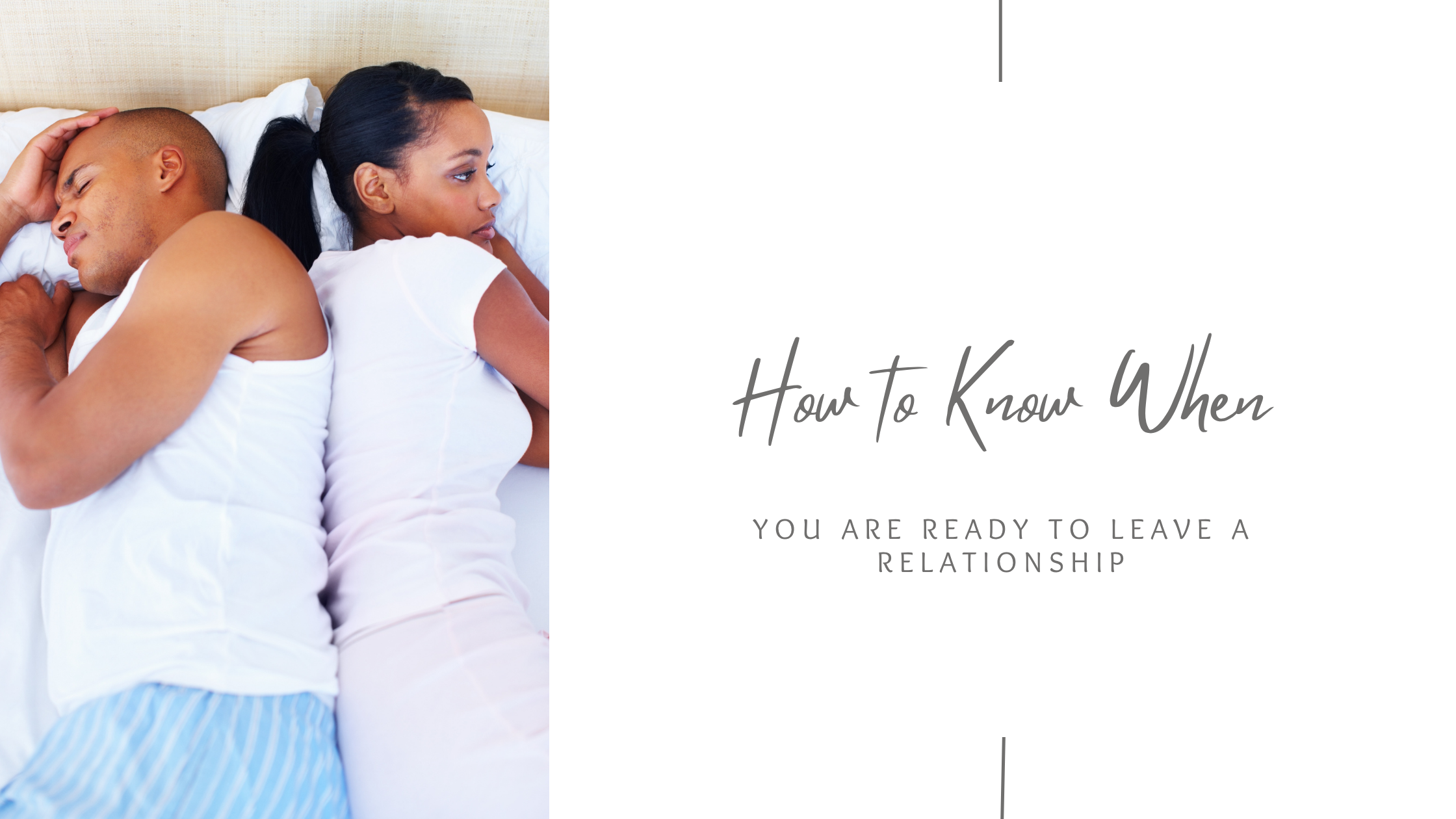
If you are searching “How do I know when to leave a relationship?” or “Should I stay or leave my marriage?” you are probably already carrying a great deal of emotional weight.
Most people do not arrive at this question lightly.
By the time someone begins seriously considering leaving a relationship, they are often exhausted from months or years of confusion, looping thoughts, guilt, hope, resentment, or emotional numbness. They may still love their partner deeply while simultaneously feeling disconnected from themselves.
As a therapist in San Francisco who specializes in helping people decide whether to stay or leave a relationship, I’ve found that many people are searching for certainty when what they actually need is deeper contact with themselves.
Because the hard truth is this: like most major life decisions, there is no universally “right” answer — only your answer.
Key Takeaways
• There is rarely one clear sign that tells you to leave a relationship.
• Ambivalence is normal and often part of the decision-making process.
• There is a cost either way: leaving and staying both require you to face difficult feelings.
• Some relationships do repair, reconnect, and become healthier over time.
• It is not wrong to stay for children, family stability, finances, or because you genuinely want more time and clarity.
• Leaving can bring grief, regret, anger, and destabilization — but also relief, aliveness, hope, and freedom.
• Good therapy should not pressure you toward staying or leaving, but help you come into deeper contact with your truth.
How Do You Know When a Relationship Is No Longer Right for You?
One of the biggest misconceptions about relationships is that if something is truly wrong, the answer will feel obvious.
Sometimes it does. But often, people remain stuck precisely because there is still love, care, history, attraction, friendship, family, or genuine goodness present. Your partner may not be abusive or cruel. They may even be trying.
And yet, something in you continues to ache.
You may feel emotionally exhausted. Lonely while lying next to someone. Chronically disappointed. Less alive than you used to be. Some people notice anxiety before seeing their partner, or a growing awareness that they are shrinking themselves to keep the relationship functioning.
At the same time, these feelings do not automatically mean leaving is the correct next step. Some couples do reconnect. Some people separate temporarily and later rebuild the relationship in a healthier way. Some relationships genuinely improve through therapy, accountability, emotional honesty, or major life changes.
The point is not to rush toward an answer. The point is to become more truthful about what is actually happening inside yourself.
Is It Normal to Feel Confused About Leaving a Relationship?
Yes. Extremely normal.
Many people think clarity should feel calm and certain. In reality, relationship crossroads often create nervous system chaos. You can deeply love someone and still feel harmed by the relationship. You can feel grief and relief simultaneously. You can want to stay and want to leave at the same time.
This does not mean you are weak or incapable of making decisions.
Often, ambivalence simply means the relationship carries real attachment, meaning, history, and complexity. One part of you may long for freedom while another wants safety. One part may hope for repair while another feels exhausted from trying.
As a therapist, I do not have an agenda for whether you stay or leave.
My role is not to convince you to end your marriage or save your relationship. My role is to help you come into deeper contact with your own truth while learning how to tolerate ambivalence — including periods where there genuinely is no answer yet.
That can be incredibly uncomfortable.
Many people become frustrated with themselves during this phase. They pressure themselves to “just decide.” They turn against themselves for not knowing. But forcing clarity from the mind often creates more confusion, not less.
Sometimes the deeper work is learning how to stay in a place of surrender and participation at the same time: facing what needs attention without trying to force an immediate answer. Staying connected to your experience instead of overriding it.
This is very different from avoidance.
What Are Signs You May Be Staying Out of Fear Instead of Love?
This is one of the most common questions people ask when deciding whether to leave a relationship.
Fear-based staying can sound like:
• “What if I regret leaving?”
• “What if I never find someone else?”
• “Maybe I’m asking for too much.”
• “I don’t want to hurt my children.”
• “Maybe things will finally change.”
• “I’m terrified of starting over.”
But it is equally important not to pathologize staying.
It is not wrong to decide to stay because you want stability for your children, because finances are intertwined, because you need more time to be sure, or because you and your partner are genuinely trying to reconnect. Some people consciously choose to stay because the relationship still contains enough love, meaning, or possibility to continue working on it.
People often imagine leaving as the painful path and staying as the safer one. In reality, both choices ask something difficult of you – there is a cost either way.
If you stay, you may need to learn how to live with frustration, disappointment, unresolved hurt, compromise, or the painful feeling that part of you is betraying yourself. If you leave, you may face grief, regret, anger, fear, destabilization, financial stress, loneliness, or the loss of the future you imagined.
Neither path is painless.
Therapy with me will help you learn the skills you need to face and process difficult emotions so that you feel less stuck.
What Does It Feel Like After Leaving a Relationship?
People often expect one emotional response after a breakup or divorce. But most people experience many contradictory feelings at once.
If you decide to leave, there is often sadness, regret, anger, and periods of destabilization as you rebuild your life. Even when leaving is your right choice, the nervous system may still experience separation as deeply painful and disorienting.
And yet, when the decision is aligned, people also tend to feel more alive.
It’s common to feel relief, freedom, renewed energy, creativity, hope, or a stronger connection to self. Sometimes people realize how much energy had been going toward suppressing what they already knew.
Deciding to leave is only the first step, and for some people, it creates space for vitality and self-trust to return, which can feel validating.
Can You Leave a Relationship Even If There’s Still Love?
Absolutely.
This is one of the hardest realities people face when considering divorce or separation. Love alone is not always enough to create a sustainable, healthy, deeply fulfilling relationship.
You may love someone and still recognize that your needs consistently go unmet. You may love them and still feel emotionally alone. You may love them while realizing the relationship repeatedly pulls you into survival patterns, self-abandonment, or emotional constriction.
Many people wait to stop loving the person before allowing themselves to leave. But relationships often end while love is still very present.
Sometimes the clearer question becomes:
“Is this relationship helping me become more fully myself, or less?”
Should You Try Therapy Before Ending a Marriage or Relationship?
Sometimes yes. Sometimes no.
Couples therapy can be transformative when both people are willing to engage honestly, take responsibility, and create change. Individual therapy can also help clarify patterns around attachment, boundaries, conflict, and emotional survival strategies.
But good therapy should not pressure you toward a predetermined outcome.
Therapy is not about convincing you to stay married or encouraging you to leave. It is about helping you reconnect to yourself enough that your decision comes from a deeper place.
Sometimes that process leads to separation. Sometimes it leads to a more emotionally grounded or amicable decision. Sometimes people do actually reconnect and get back together in healthier, more honest ways.
How Do You Make Peace With the Decision to Stay or Leave?
Most people want certainty before making a major life decision. Unfortunately, certainty is often something we build after a choice through grieving, integration, and lived experience.
There is usually no moment where every doubt disappears.
At some point, many people reach a realization:
“I may not know the future, but I know I cannot continue ignoring what feels true for me.”
That is different from certainty. It is a type of connection with your wisdom self - one that you will need to continue to live into through moments of doubt or emotional charge.
You do not need a dramatic justification for your pain. You do not need to prove your partner is terrible before acknowledging something is not working. And you do not need to rush yourself into an answer before you are ready.
Like most major life decisions, there is no perfect answer waiting somewhere outside of you. There is only the ongoing work of becoming honest enough to live your own answer.
Based in San Francisco, I work with people navigating relationship uncertainty, breakup, divorce, and relational crossroads through therapy and psychedelic integration support across California.